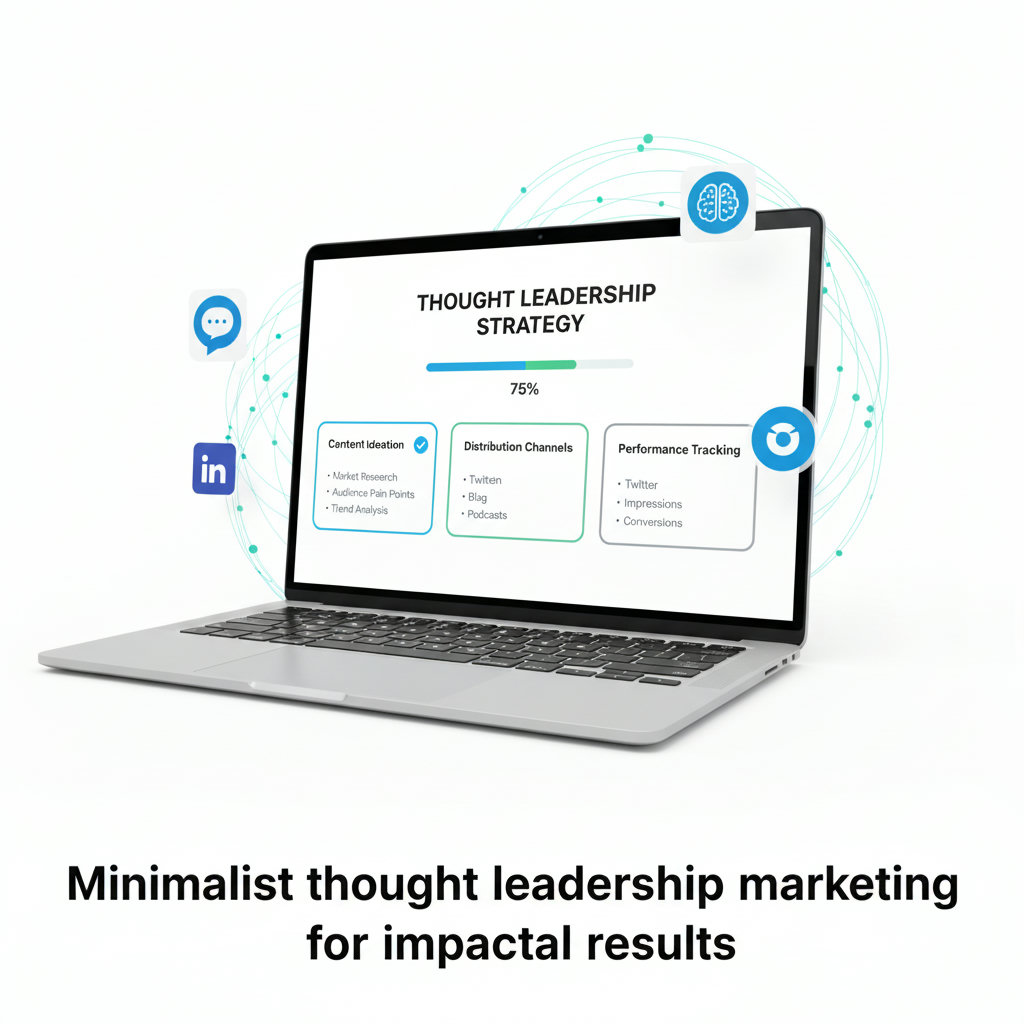
Ah, time! That elusive, slippery commodity that always seems to be in short supply, especially for modern marketers. You’re constantly juggling campaigns, strategizing for growth, and, let’s be honest, probably wishing you had a few extra hours in the day. In this frenetic pace, the idea of producing more and more content can feel overwhelming, right? But what if the secret to cutting through the noise and truly resonating with your audience wasn’t about doing more, but about doing less? This isn’t just about simplification; it’s about a fundamental shift in how we approach thought leadership marketing. Welcome to the world of minimalist content strategy.

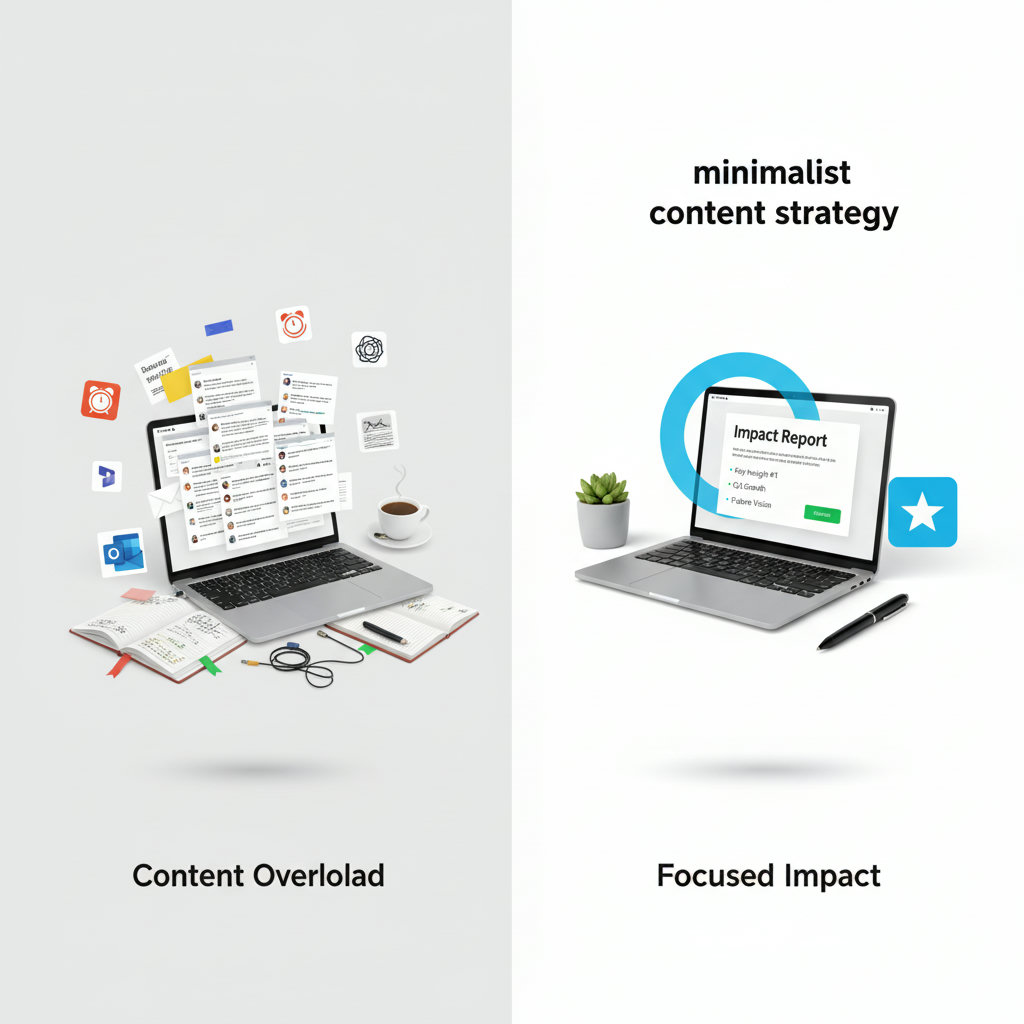
For too long, the prevailing wisdom has been “more is more.” Produce a blog post every day! Create a video for every platform! Send out five newsletters a week! While volume certainly has its place, it often leads to diluted messages, exhausted teams, and an audience suffering from content fatigue. But imagine if every piece of content you put out was a potent, laser-focused gem, crafted with precision and purpose. That’s the promise of minimalist content. It’s not just about aesthetics; it’s a powerful approach to enhancing engagement, improving user experience, and ensuring your message truly sticks amidst the endless scroll.
Defining Minimalist Content
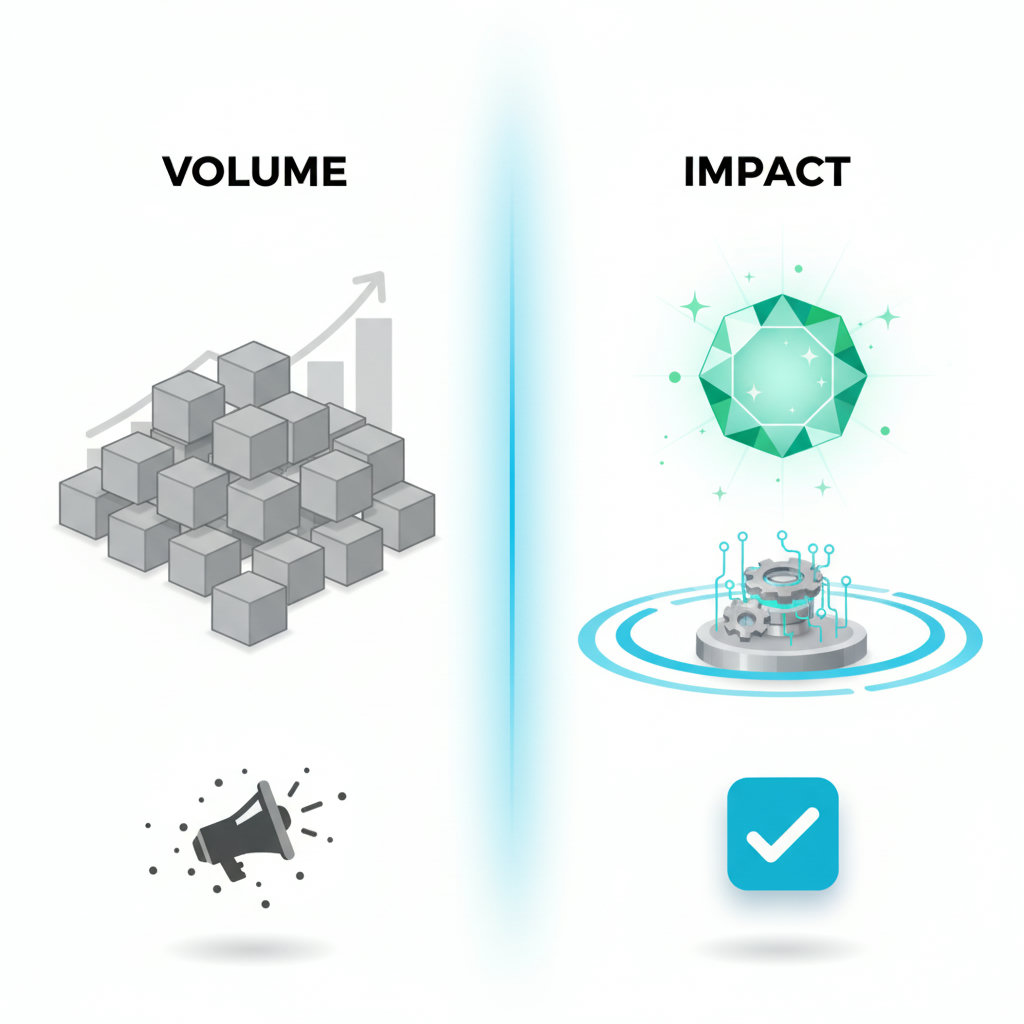
Minimalist content isn’t just a fancy way of saying “short content.” Oh no, it’s far more profound than that. At its heart, minimalist content is about a philosophy, a deliberate choice to prioritize impact over volume, and clarity over gratuitous detail.
Core Principles
So, what are we talking about here? It boils down to three non-negotiables:
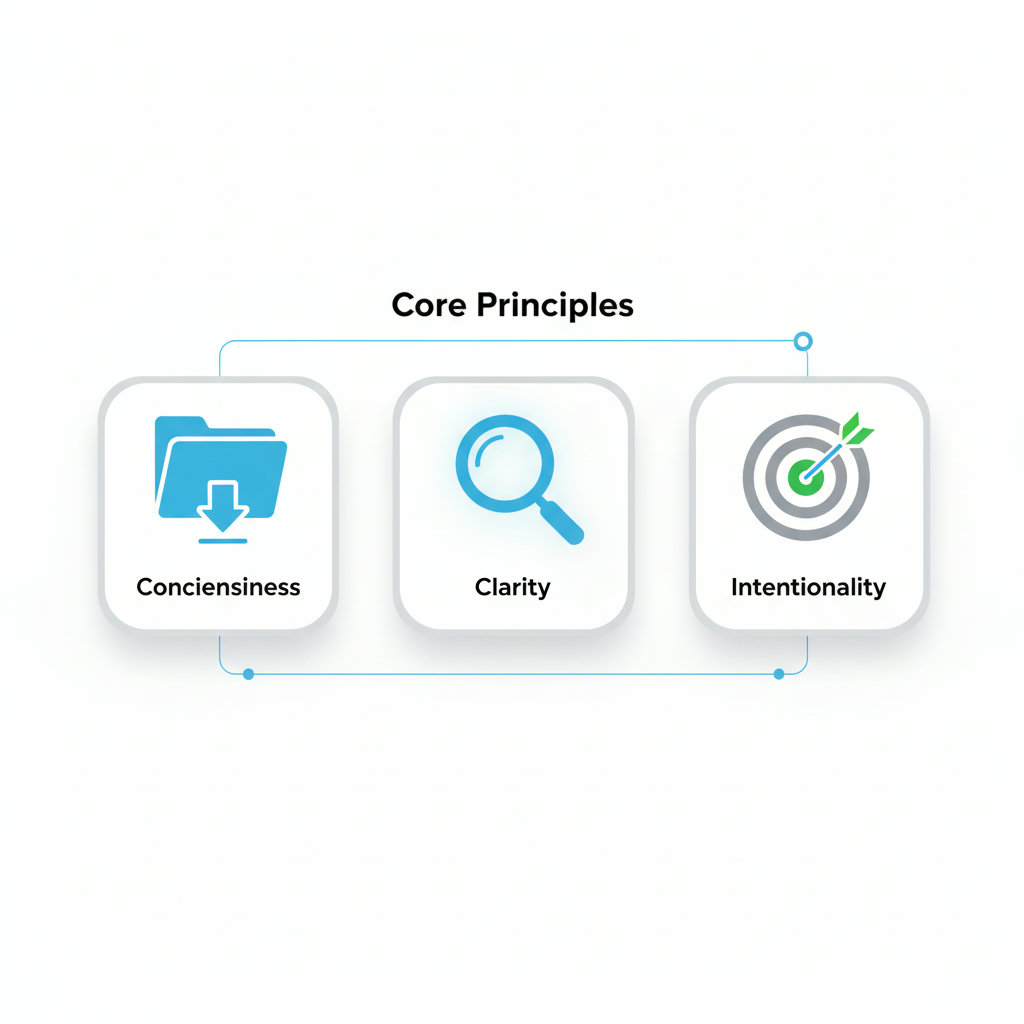
- Conciseness: Every word, every image, every element earns its place. There’s no room for fluff, repetition, or unnecessary detours. It’s about getting to the point with elegant efficiency, making sure your thought leadership marketing is direct and impactful.
- Clarity: The message must be understood instantly, unequivocally. No ambiguity, no complex jargon that sends readers scrambling for a dictionary. It’s about stripping away anything that could obscure the core idea.
- Intentionality: This is perhaps the most critical. Every piece of minimalist content has a clear, singular goal. What do you want your audience to think, feel, or do after consuming this content? If you can’t answer that, it doesn’t belong.
Distinguishing from Simplicity
Simple, right? Not quite. Minimalist content is often simple, but simplicity isn’t always minimalist. Think of it this way: a simple design might just lack complexity. Minimalist content, however, involves a purpose-driven reduction. It asks: “What can I remove without losing the essential meaning or impact?” This isn’t about laziness; it’s about deliberate craftsmanship. It prioritizes impact over volume, ensuring that what remains is powerful and effective.
Benefits Beyond Aesthetics
Lest you think this is merely about pretty designs, let’s talk brass tacks. Embracing minimalist content in your thought leadership marketing brings tangible returns:
- Improved Engagement: When content is easy to digest and immediately valuable, people are more likely to interact with it, share it, and spend more time with it.
- Enhanced User Experience: Nobody wants to feel overwhelmed. Clean, focused content respects your audience’s time and attention, leading to a more positive experience.
- Increased Message Retention: When there’s less noise, the core message shines brighter. People remember clear, concise information far better than a cluttered data dump.
Strategic Planning for Impact
You can’t just wake up one morning and decide to be “minimalist” with your content. It requires a thoughtful, strategic approach from the ground up, especially if you want your thought leadership marketing to truly move the needle.
Audience-Centric Focus
Before you even think about what you want to say, consider who you’re speaking to. This is where your inner detective comes out. It’s about identifying core needs – what problems are they trying to solve? What questions keep them up at night? When you know this, you can ruthlessly eliminate noise, focusing only on the information that directly addresses those needs. Anything else is a distraction.
Objective-Driven Content Creation
Every piece of minimalist content must begin with a clear “why.” What do you want this specific piece to achieve? Are you aiming for brand awareness, lead generation, customer education, or something else entirely? By defining primary goals for each content asset, you ensure every word and image serves a purpose. This also ties directly into measuring essential metrics – you can’t assess success if you haven’t defined what success looks like for that particular piece.
Content Audit & Decluttering
This is where the real work often begins. Take a good, hard look at your existing content assets. What’s working? What’s collecting digital dust? Assessing existing assets helps you understand your baseline. Then, relentlessly identify redundancies. Do you have three blog posts essentially saying the same thing, just with slightly different titles? Can they be consolidated, updated, or even removed? This decluttering process isn’t just spring cleaning; it’s an essential step towards a lean, effective content library that exemplifies modern thought leadership marketing.
Crafting Concise & Engaging Content
Once you have your strategy in place, how do you actually create this impactful, minimalist content? It’s an art, a delicate balance of precision and allure.
Language & Messaging
The words you choose are your most potent tools. Embrace a strong, active voice that cuts through passive constructions and gets straight to the point. Practice direct communication – say what you mean, clearly and unequivocally, without beating around the bush. And please, for the love of clarity, make a conscious effort at eliminating jargon. While industry terms have their place internally, your audience often just wants to understand the benefit, the solution, the core idea, without needing a decoder ring. Simple language doesn’t diminish complexity; it makes it accessible.
Visual & Structural Elements
Minimalism isn’t just about what you say, but how you present it. Think about the power of whitespace utilization. Just like in interior design, empty space on a page (or screen) allows elements to breathe, guiding the eye and enhancing readability. Employ strategic formatting: use headings, subheadings, bullet points, and short paragraphs to break up text and make it scannable. And don’t underestimate the impact of iconography & imagery. A well-chosen icon or a powerful, relevant image can convey a message far more quickly and effectively than a paragraph of text. These elements are crucial for engaging your audience in your thought leadership marketing.
Channel Optimization
Not every piece of content needs to be an epic masterpiece. In fact, minimalist content thrives on adaptability. This means tailoring to platform constraints. A LinkedIn post demands a different level of conciseness than a whitepaper. Twitter (or X) forces extreme brevity. Understand the inherent limitations and opportunities of each channel. This often leads to micro-content creation: short videos, engaging infographics, pithy social media updates – each designed to deliver maximum impact in a minimal package. For instance, creating shareable snippets for social media from a larger piece of AI employee advocacy content can significantly extend its reach and impact.
Executing & Sustaining a Minimalist Approach
Adopting a minimalist approach to thought leadership marketing isn’t a one-and-done deal. It requires ongoing commitment, process refinement, and a cultural shift within your team.
Workflow Efficiencies
When you’re committed to conciseness, your production process naturally becomes more efficient. This means developing streamlined production processes where every step, from ideation to final review, is focused on eliminating waste and maximizing clarity. It also calls for focused review cycles – ensuring that reviewers are not just spell-checking, but actively asking: “Does this piece truly need this sentence/paragraph/image? Is there a clearer, more concise way to express this idea?” This rigorous internal editing is key.
Measurement & Iteration
How do you know your minimalist content is working? By rigorously tracking key performance indicators (KPIs). Are engagement rates up? Is time on page increasing for specific, concise pieces? Are conversion rates improving? Don’t be afraid to integrate user feedback. Conduct A/B tests. Ask your audience directly what they find most helpful and engaging. Minimalist content isn’t static; it’s a living entity that evolves based on what truly resonates with your audience. For example, Forrester research often highlights the critical role of user experience in driving business outcomes, reinforcing the value of this iterative approach.
Building a Minimalist Culture
Ultimately, to truly embed this approach, it needs to be more than just a strategy; it needs to become part of your organization’s DNA. This involves team education – teaching everyone, from writers to designers to strategists, the principles and benefits of minimalist content. It means fostering advocacy for clarity, where everyone champions conciseness and intentionality in all communications, whether internal or external. Think of it as a shared commitment to respecting your audience’s time and delivering maximum value with minimum fuss. Companies like Stripe are renowned for their highly functional, minimalist documentation, which serves as a testament to the power of such a culture.
So, are you ready to embrace the art of less? To strip away the unnecessary, amplify the essential, and truly stand out with your thought leadership marketing? It’s not just a trend; it’s a smarter, more sustainable, and ultimately more impactful way to connect with your world. Cheers to more impact, less noise! 🥂
FAQ Section
What is minimalist content strategy in thought leadership marketing?
Minimalist content strategy in thought leadership marketing is a deliberate approach focused on creating highly concise, clear, and intentional content. It prioritizes delivering maximum impact and value to the audience by removing all non-essential elements, ensuring that every word and visual serves a specific purpose and contributes to the core message.
How does minimalist content differ from just “short” content?
While minimalist content is often short, its core difference lies in intentionality and purpose-driven reduction. “Short” content might merely lack length without deliberate thought. Minimalist content, however, involves a strategic process of stripping away anything that doesn’t enhance clarity or impact, ensuring that what remains is powerful, focused, and free of clutter.
What are the main benefits of adopting a minimalist approach to content?
The primary benefits include improved audience engagement due to easier digestion of information, enhanced user experience by respecting the audience’s time and attention, and increased message retention as key takeaways are clearer without surrounding noise. It also leads to more efficient content production and often higher conversion rates.
Can a minimalist approach be applied to all types of thought leadership content?
Yes, a minimalist approach can be applied across various content formats, from blog posts and whitepapers to social media updates, videos, and presentations. The key is adapting the principles of conciseness, clarity, and intentionality to the specific constraints and opportunities of each channel and content type, focusing on the core value proposition.
How can one measure the success of a minimalist content strategy?
Success can be measured through various key performance indicators (KPIs) such as increased engagement rates (e.g., higher click-through rates, shares, comments), improved time on page for specific content pieces, lower bounce rates, and ultimately, higher conversion rates for desired actions. Gathering direct user feedback and conducting A/B tests can also provide valuable insights into effectiveness.
Is it difficult to transition to a minimalist content strategy?
Transitioning requires a shift in mindset and processes. It involves conducting a thorough content audit to identify redundancies, establishing clear objectives for every piece of content, and educating your team on the principles of conciseness and clarity. While it may require initial effort to re-evaluate existing content and workflows, the long-term benefits in efficiency and impact often outweigh the initial challenges.