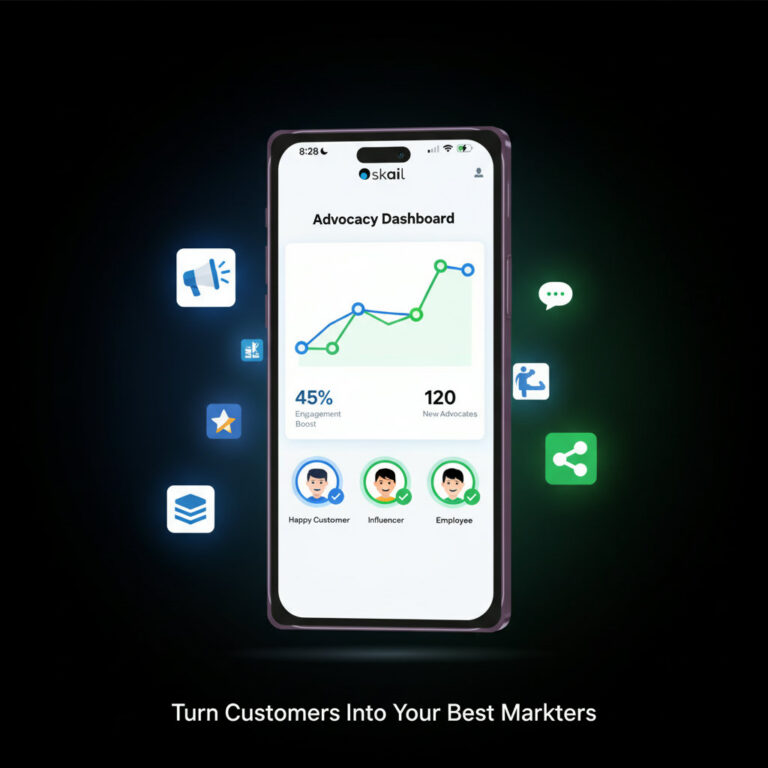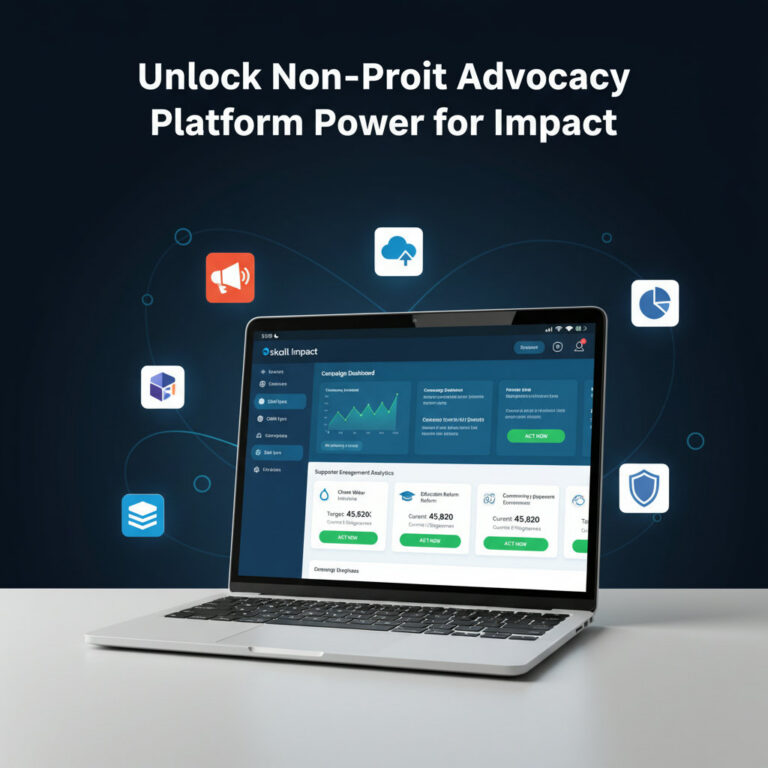

Ah, time! That elusive, slippery commodity we all chase, especially when it comes to growing our business and reaching new audiences. You’re constantly looking for an edge, a way to amplify your message without breaking the bank or hiring an army of marketers. You’ve heard the whispers, seen the results—employee advocacy is where it’s at. But how do you harness that power without turning your passionate team into reluctant content sharers? Simple, right? Not quite. Managing an effective employee advocacy program, especially across myriad social platforms, can feel like trying to herd cats through a deep sea of prospect research. This is precisely where a dedicated social media advocacy tool becomes not just a nice-to-have, but an absolute necessity.
Think about it: who doesn’t need coffee breaks or gets tired of sending “Hey, I thought you might be interested in…” messages? And the follow-ups – the “Hey, just checking in!” messages that haunt your dreams. Without a structured approach, employee advocacy can quickly devolve from an exciting opportunity into a logistical nightmare. But imagine a different reality, one where your team effortlessly shares your content, expanding your reach exponentially, while you track everything with ease. That, my friends, is the magical realm a powerful social media advocacy tool opens up.
The Power of Your People: Unleashing Authentic Voices
Your employees are your most valuable asset, not just within the four walls of your office, but out there in the digital ether. They have networks, credibility, and voices that resonate differently than official corporate channels. In an age of skepticism towards traditional advertising, messages shared by a trusted friend or colleague carry immense weight. This isn’t just theory; studies have consistently shown that content shared by employees receives significantly higher engagement and reach than when shared by official company pages. Salesforce, for example, reports that employee-shared content gets 8x more engagement than content shared by brand channels. It’s the ultimate word-of-mouth, scaled.
But here’s the rub: empowering your team to become brand ambassadors isn’t as simple as telling them to share a link. You need to provide them with the right tools, the right content, and the right incentives, all while making it incredibly easy and intuitive. This is where the detective work begins, not of finding new prospects, but of figuring out how to transform your internal champions into external advocates. And trust me, it’s a lot more fulfilling than searching for that perfect hashtag.
Taming the Social Beast: Challenges of Manual Advocacy
Let’s get real for a moment. Trying to run an employee advocacy program manually is a recipe for exhaustion. You’re playing content curator, distribution manager, and data analyst all at once. Picture this: you’ve got a fantastic new blog post, a groundbreaking product announcement, or a compelling company story. You email it out to your team, perhaps drop it in a Slack channel, and then… you hope. You hope they share it. You hope they use the right hashtags. You hope they don’t accidentally post outdated information. And then, you have no real way of tracking who shared what, what performed well, or the overall impact on your brand’s reach.
This fragmented approach leads to several common pitfalls:
Low Adoption Rates: If it’s a hassle, people won’t do it. Plain and simple.
Inconsistent Messaging: Without clear guidelines and easy access to approved content, your brand’s voice can become diluted.
Lack of Measurement: How do you justify the effort if you can’t show ROI?
Compliance Risks: Employees might inadvertently share sensitive information or represent the company incorrectly.
Time Sink: For both marketers managing the program and employees trying to participate.
These challenges are precisely why a manual approach to employee advocacy rarely scales. It’s a battle against inefficiency and human nature itself. Luckily, there’s a better way, a more streamlined path to harness your employees’ social networks effectively.
The Game-Changer: What a Social Media Advocacy Tool Does for You
Enter the social media advocacy tool. This isn’t just another piece of software; it’s your organizational superpower, transforming your team into a powerful, coordinated marketing force. At its core, a good tool centralizes content, simplifies sharing, and provides invaluable analytics – making the entire process efficient, measurable, and even fun!
Streamlined Content Distribution and Curation
Imagine a single hub where all approved company content lives. Your latest blog posts, press releases, job openings, and even curated industry news directly relevant to your brand – all neatly organized and ready to share. A robust social media advocacy tool allows you to:
Curate diverse content: Not just your own, but industry articles, thought leadership, and even competitor analysis that helps your team stay informed and share valuable insights.
Schedule content: For you to push out to your team, or for them to schedule their shares on their preferred platforms.
Suggest pre-approved captions: Ensuring consistent brand messaging while still allowing for personalization.
Integrate with existing content sources: Blogs, news feeds, internal communication tools.
This means your team spends less time searching for content and more time amplifying your message, tailored to their networks.
Effortless Sharing Across Multiple Platforms
One-click sharing. Let that sink in. Instead of logging into LinkedIn, then Twitter, then Facebook, then Instagram, your employees can share approved content with a single click from the advocacy platform. The best tools support a wide array of social networks, allowing your team to engage where they’re most comfortable and influential. This dramatically reduces the friction associated with sharing, boosting participation rates and making your employees feel empowered rather than burdened. It also simplifies the process of AI employee advocacy, as intelligent platforms can suggest optimal content for each employee’s network.
Invaluable Analytics and ROI Tracking
This is where the magic truly unfolds. A dedicated social media advocacy tool provides deep insights into your program’s performance. You can track:
Individual Employee Performance: See who’s sharing what, and what kind of engagement they’re generating. A little healthy competition never hurt anyone!
Content Performance: Identify your top-performing pieces and understand what resonates most with your audience. This data can inform your broader content strategy, ensuring you’re creating what people truly want.
Overall Program Reach and Engagement: Quantify the amplified reach, the increased traffic to your website, and even potential leads generated directly from employee shares. This allows you to prove the value of your program and secure further investment.
Key Metrics: Clicks, shares, likes, comments, and the ultimate – conversions.
With this data, you can move beyond guesswork and make data-driven decisions that continually optimize your advocacy efforts. It’s like having a full-time social media strategist dedicated solely to employee shares.
Maximizing Impact with Your Social Media Advocacy Tool
Implementing a new tool is one thing; leveraging it to its full potential is another. To truly supercharge your efforts with a social media advocacy tool, consider these strategies:
Gamification and Incentives
Who doesn’t love a good challenge? Introduce gamification elements like leaderboards, points for shares and engagement, and rewards for top advocates. This transforms sharing into a fun, competitive activity. Incentives don’t always have to be monetary; recognition, professional development opportunities, or even a shout-out from the CEO can go a long way in encouraging participation.
Training and Support
Don’t just launch the tool and expect everyone to be an expert. Provide clear, concise training on how to use the platform, best practices for social media sharing, and guidelines for brand voice. Offer ongoing support and answer questions promptly. Remember, you’re empowering them to be brand ambassadors, so equip them with the knowledge and confidence they need. Wikipedia offers a great resource on principles of effective communication: effective communication.
Integrate with Your Marketing Strategy
Your employee advocacy program shouldn’t operate in a silo. Integrate it deeply with your broader marketing and content strategy. Use it to promote new campaigns, share event updates, and amplify thought leadership pieces. The synergy between your official channels and your employee advocates will create a much louder, more resonant message. You’ll find that this integrated approach also makes your overall marketing efforts more robust and impactful. Another valuable resource is the Harvard Business Review, which often publishes articles on integrating various marketing functions: Harvard Business Review.
Choosing the Right Social Media Advocacy Tool
The market is awash with options, so how do you pick the social media advocacy tool that’s right for you? Consider your team size, budget, specific social media platforms your employees use, and most importantly, the ease of use. A complex tool, no matter how powerful, will have low adoption. Look for intuitive interfaces, excellent customer support, and features that align with your strategic goals.
Ultimately, a social media advocacy tool is an investment in your brand’s future. It’s an investment in amplifying your message, building trust, and transforming your employees into your most passionate, effective marketing force. It’s about becoming a “time millionaire” – getting more done with less effort, and seeing your brand’s reach grow beyond anything you thought possible.
FAQ: Your Burning Questions About Social Media Advocacy Tools
What is a social media advocacy tool?
A social media advocacy tool is a software platform designed to help organizations empower their employees to easily share company-approved content on their personal social media profiles. It centralizes content, simplifies sharing, provides analytics, and often includes features like gamification and scheduling.

Why do I need a specific social media advocacy tool? Can’t we just email links?
While you can email links, a dedicated social media advocacy tool offers significant advantages. It streamlines content curation, provides one-click sharing across multiple platforms, ensures consistent messaging, tracks performance and ROI, and significantly increases employee adoption by making the process effortless and rewarding. Manual methods are inefficient and lack measurable outcomes.

What are the main benefits of using a social media advocacy tool?
The main benefits include increased brand reach and visibility, enhanced brand trust and credibility, improved employee engagement and satisfaction, simplified content distribution, valuable analytics for ROI tracking, and significant time savings for marketing teams.

How does a social media advocacy tool help with brand consistency?
Most tools allow administrators to pre-approve content and even suggest captions, ensuring that employees share messages that align with the brand’s voice and guidelines. This prevents miscommunication and ensures a cohesive brand presence across all shared content.

Is it difficult to get employees to use a social media advocacy tool?
Adoption depends on the tool’s ease of use and how well the program is introduced. A user-friendly interface, clear training, and incentives (like gamification or recognition) can significantly boost employee participation and make the process enjoyable and rewarding for them.
What kind of results can I expect from using a social media advocacy tool?
You can expect a significant increase in social media reach and impressions, higher engagement rates on shared content (often much higher than official brand channels), increased website traffic from employee shares, and improved brand perception. Many organizations also report a boost in employee morale and a stronger sense of community.
***