Defining Minimalist Content
Ah, the digital age! A constant deluge of information, a never-ending scroll, and the relentless battle for attention. In this cacophony, what if the secret to standing out isn’t to shout louder, but to speak smarter? Enter minimalist content. It’s not about doing less for the sake of it; it’s about doing more with less. It’s about precision, purpose, and profound impact. This isn’t just a trend; it’s a strategic imperative for any business leveraging AI employee advocacy or other advanced tools within their B2B marketing efforts.
Core Principles
At its heart, minimalist content adheres to a few guiding stars:
- Clarity: No room for ambiguity, no space for convoluted concepts. Your message should be crystal clear, instantly digestible. Think of it as a perfectly polished diamond – every facet reveals its brilliance without obstruction.
- Conciseness: This isn’t about brevity; it’s about efficiency. Every word, every image, every design element must earn its place. If it doesn’t add value, it subtracts from your impact. It’s like a master chef reducing a sauce – what remains is pure, intense flavor.
- Impact: The ultimate goal. Minimalist content aims for maximum resonance. It’s designed to provoke thought, inspire action, and leave a lasting impression, all without overwhelming the recipient. It’s the difference between a long, rambling monologue and a perfectly delivered mic drop.
Distinguishing from Brevity
Now, let’s clear up a common misconception. Minimalist content is often confused with mere brevity. “Just make it short!” you might hear. But brevity is simply a measure of length; minimalism is a philosophy of intent.
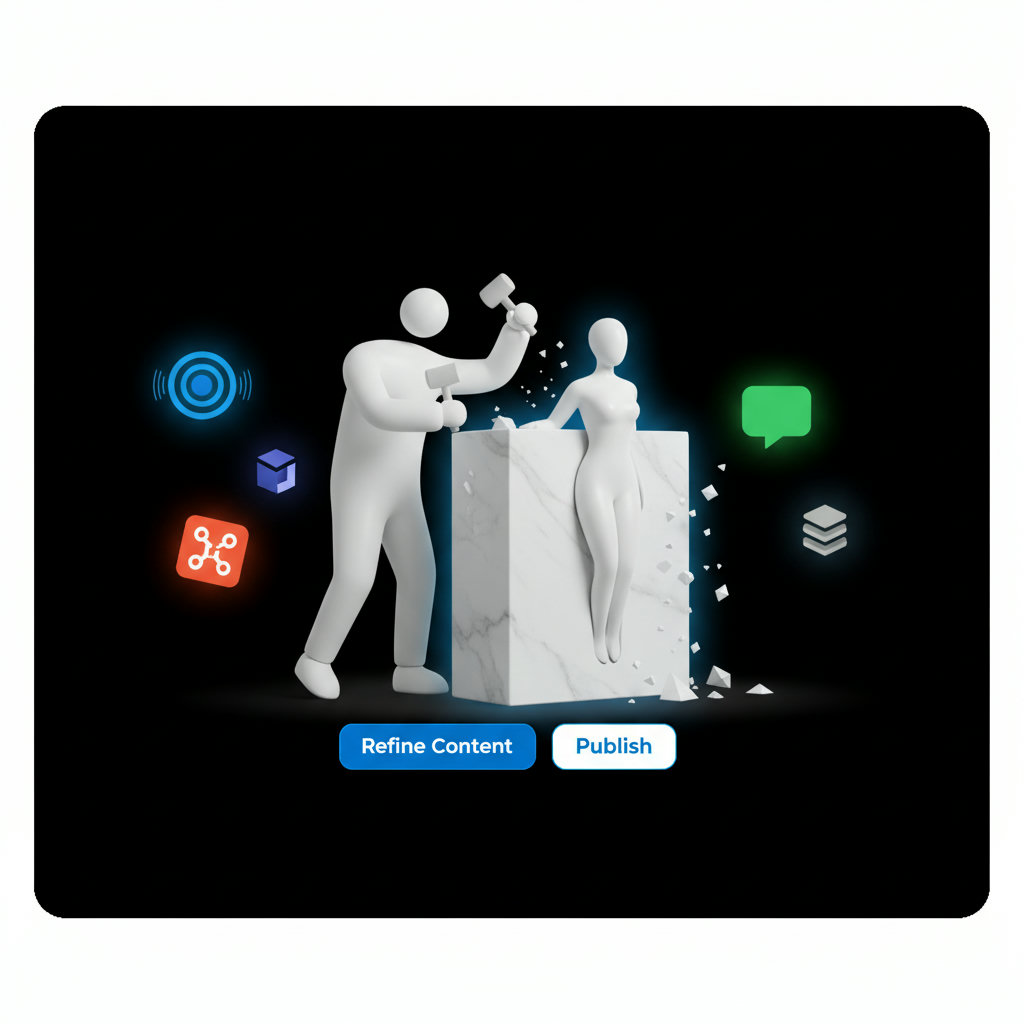
- Purposeful Omission: This is the cornerstone. Minimalist content strategically leaves things out – not because it’s lazy, but because what’s omitted allows what is present to shine brighter. It’s the white space on a page that frames the core message, making it more powerful. It requires careful thought, like a skilled sculptor chipping away everything that isn’t the statue.
- Essentialism: Every piece of content, every campaign, every customer touchpoint should boil down to its absolute essence. What is the single, most crucial takeaway? What action do you want your audience to take? Stripping away the excess reveals this core, making your communication undeniably potent. This dedication to essentialism is a hallmark of effective marketing strategy in the modern era.
Benefits & Applications
Why should you care about minimalist content, especially in the evolving landscape of AI for B2B marketing?
- Enhanced Engagement: In a world of fleeting attention spans, less means more. When your audience doesn’t feel overwhelmed, they’re more likely to engage. They’ll read that email, click that link, watch that short video because it respects their time and delivers value quickly.
- Improved Retention: Clear, concise, and impactful messages are easier to remember. When you cut through the noise, your brand’s core message sticks. This is crucial for building lasting relationships and ensuring your brand isn’t just seen, but understood.
Strategic Framework for Minimalism
Adopting a minimalist approach isn’t intuitive for many. It often feels counter-productive to the “more content is better” mantra. But with the rise of AI for B2B marketing, it’s about making every piece of content count. You need a deliberate framework to strip away the superfluous and elevate the essential.
Audience-Centric Approach
Forget what you want to say for a moment. What does your audience need to hear?
- Identifying Core Needs: This is where your customer research, data analytics, and empathy truly shine. What problems are they trying to solve? What aspirations do they have? What information is absolutely critical for them to make a decision or understand your value? Focus on these fundamental questions.
- Eliminating Noise: Once you know their core needs, actively prune anything that doesn’t directly address them. Jargon, unnecessary features (that aren’t benefits), tangential stories, or information that can be found elsewhere – all this is noise. Your job is to create a clear signal path.
Content Audit & Deconstruction
This is where the rubber meets the road. Look at your existing content with a critical, minimalist eye.
- Pruning Unnecessary Elements: Go through your blog posts, landing pages, emails, and social media updates. Are there paragraphs that can be reduced to a sentence? Are there sentences that can be reduced to a few words or even an emoji? Can you replace text with a single, powerful image? Be ruthless.
- Streamlining Existing Assets: Don’t just delete; repurpose and condense. Can several lengthy whitepapers be distilled into a punchy infographic series? Can a 5-minute video become a 30-second animated explainer? The goal is to maximize the value delivered per unit of content.
Channel Optimization
Different channels demand different levels of minimalism. What works on LinkedIn won’t necessarily fly on TikTok, and vice versa.
- Tailoring for Platforms: Understand the inherent limitations and expectations of each platform. Twitter (X) demands ultra-concise thoughts, while a concise Medium post might be slightly longer but still respects the reader’s time. Your email subject lines? The definition of minimalism.
- Leveraging Visual Brevity: Images, videos, and infographics are powerful minimalist tools. They can convey complex information in seconds, often more effectively than paragraphs of text. Think of a well-designed data visualization versus a spreadsheet. Which tells the story faster? This is particularly relevant as visual marketing content continues to dominate online engagement.
Crafting Minimalist Narratives
Minimalism isn’t about being bland or boring. Quite the opposite! It’s about being sharp, engaging, and memorable. It requires a deliberate approach to storytelling.
Powerful Headlines & Hooks
In a world swamped with information, your headline is your first (and often only) chance to grab attention.
- Direct and Compelling: Cut straight to the benefit or the intrigue. “Increase Your Sales by 30% with This One Tactic” is direct. “The Hidden Secret to Unlocking Unprecedented Business Growth” is compelling. Avoid vague or overly clever headlines that require deciphering.
- Intrigue with Brevity: Sometimes, a short, provocative question or statement is all you need. “Still struggling with lead generation?” “Your next big idea, simplified.” The goal is to make the reader have to know more, without giving everything away upfront.
Scannable Structure & Flow
People don’t read online; they scan. Your content needs to be designed for this behavior.
- Logical Progression: Even with minimal text, there should be a clear, natural flow of ideas. Use headings, subheadings, bullet points, and numbered lists to break up information into digestible chunks. Each section should build on the last, guiding the reader effortlessly.
- Visual Breaks: White space is your friend. Short paragraphs, ample line breaks, and judicious use of bolding or italics help the eye navigate the page. Think of it as a well-choreographed dance for the reader’s gaze.
Impactful Language & Visuals
This is where the magic happens – making every word and every image count.
- Precise Word Choice: Ditch the corporate jargon, the buzzwords, and the fluffed-up language. Opt for strong verbs, clear nouns, and vivid adjectives. Every word should contribute to understanding and impact. Hemingway would be proud.
- Strategic Imagery: Don’t use images simply to fill space. Every visual should serve a purpose: to illustrate a point, evoke an emotion, break up text, or explain a concept. High-quality, relevant graphics are essential for making your minimalist content resonate. Think metaphors, not just decorations.
Measuring Minimalist Effectiveness
So, you’ve embraced the minimalist mantra. How do you know if it’s working? It’s not enough to simply feel like your content is better; you need data to prove it. This data-driven approach is a core tenet of effective AI for B2B marketing.
Key Performance Indicators (KPIs)
Minimalist content should impact your bottom line, not just your aesthetic.
- Engagement Metrics: Look beyond vanity metrics. Are people spending more time on your page? Are they sharing the content? Are they clicking through to related resources? High engagement data suggests your content is cutting through the clutter and truly resonating. Look for increased time on page, lower bounce rates, and higher shares.
- Conversion Rates: Ultimately, minimalist content aims to drive action. Are your simplified landing pages generating more leads? Are your concise calls to action leading to more sign-ups or purchases? A direct increase in conversion rates is the strongest indicator of content effectiveness.
User Feedback & Analysis
Sometimes, the best insights come directly from your audience.
- Simplicity Scores: While often subjective, you can gather feedback through surveys or focus groups. Ask users to rate the clarity and ease of understanding of your content. Are they grasping the core message quickly?
- Clarity Assessments: Tools that analyze readability can offer objective insights, but also consider direct user interviews. Ask: “What was the one key takeaway?” If everyone gives a similar, correct answer, you’ve achieved clarity.
Iteration & Refinement
Minimalism isn’t a one-and-done deal. It’s a continuous journey of improvement.
- Continuous Optimization: The digital landscape, and your audience, are constantly evolving. What was effectively minimalist last year might need tweaking today. Regularly review your content and identify areas for further reduction and sharpening.
- A/B Testing for Brevity: This is your secret weapon. Test different versions of headlines, calls to action, or even entire content formats. Does a shorter email subject line outperform a longer one? Does an infographic generate more clicks than a short blog post on the same topic? Let the data guide your refinement.
FAQ Section
What is minimalist content in B2B marketing?
Minimalist content in B2B marketing is a strategic approach focused on delivering maximum impact with the fewest possible words, images, or design elements. It prioritizes clarity, conciseness, and purposeful omission to ensure the core message is understood quickly and effectively by a busy professional audience. It’s about essentialism, driving engagement and retention through highly focused communication, often enhanced by AI for B2B marketing tools.
How does AI for B2B marketing relate to a minimalist content strategy?
AI tools can significantly enhance a minimalist content strategy by helping identify core audience needs, pinpointing topics with high impact potential, and even generating concise copy. AI-powered analytics can help audit existing content for unnecessary elements, while generative AI can assist in crafting powerful, succinct headlines or summarizing lengthy reports into digestible snippets. This allows marketers to create sharper, more effective messages with greater efficiency.

What are the main benefits of adopting a minimalist content strategy?
The primary benefits include enhanced audience engagement due to easier consumption, improved message retention as core ideas stand out, increased conversion rates from clearer calls to action, and greater efficiency in content production and consumption. It helps cut through digital clutter, making your brand’s voice more distinct and memorable in a competitive B2B landscape.

Is “brief” content the same as “minimalist” content?
No, not quite. While minimalist content is often brief, brevity refers simply to short length. Minimalist content, on the other hand, is defined by its purposeful omission and essentialism. It’s about removing anything that doesn’t add value or convey the core message efficiently, making every element count, rather than just being short for shortness’ sake.
How can I start implementing a minimalist content strategy?
Begin by conducting a thorough audit of your existing content to identify areas for pruning and streamlining. Focus on understanding your audience’s core needs to eliminate “noise” in your messaging. Then, apply these principles when crafting new content: prioritize powerful headlines, utilize scannable structures, and use precise language and strategic visuals. Continuously measure effectiveness with KPIs like engagement and conversion rates, and refine based on user feedback and A/B testing.

What are some examples of minimalist content in B2B?
Examples include concise, value-driven LinkedIn posts with a single compelling image, impactful email subject lines followed by brief, benefit-oriented body copy, short explainer videos that get straight to the point, data visualizations that tell a complex story instantly, or landing pages with minimal text and a clear call to action. The key is that every element serves a precise purpose.