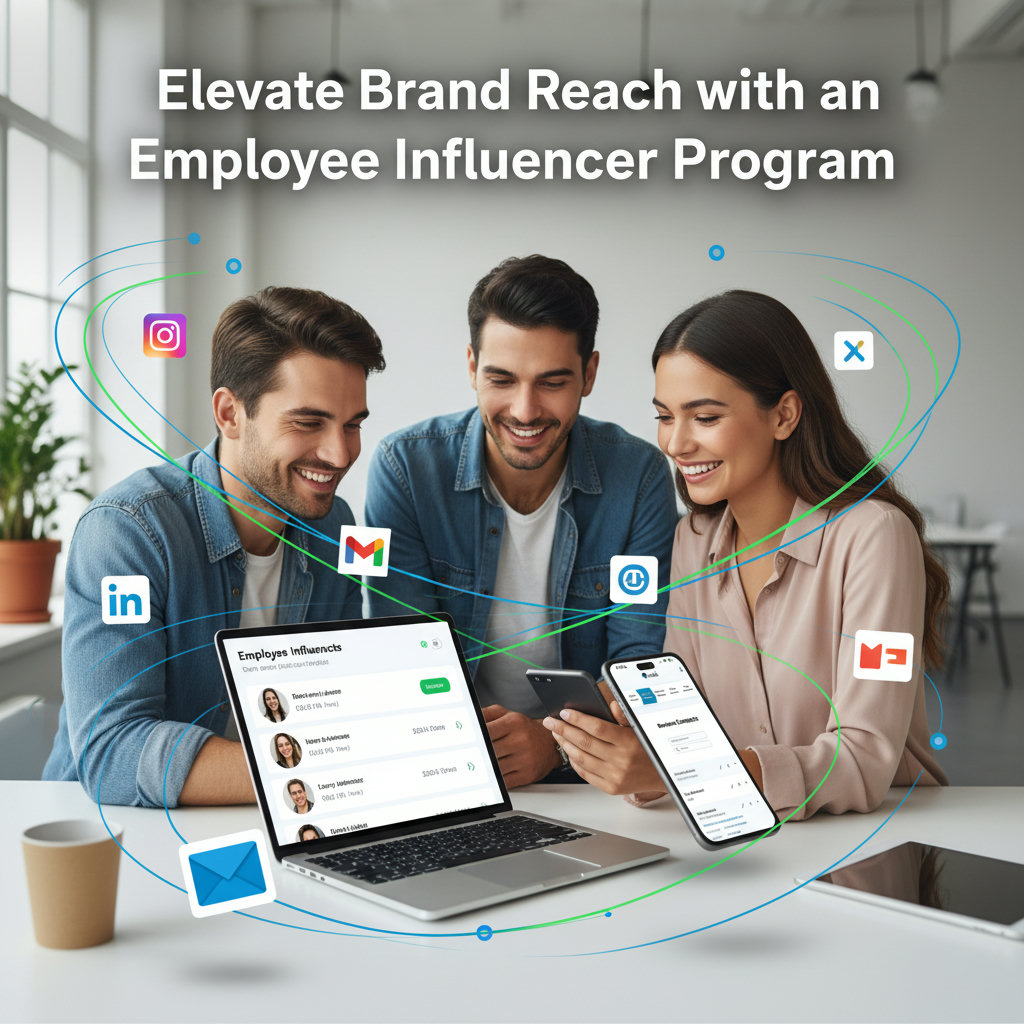
Unlock the full potential of your team with an effective employee influencer program. Discover how empowering employees transforms brand reach and engagement. Get actionable insights to elevate your advocacy strategy.
The LinkedIn Engagement Reality Check
You pour hours into your LinkedIn Company Page. You craft the perfect posts, curate stunning visuals, and hit publish, full of hope. Then… crickets. Or maybe a smattering of likes, mostly from your own colleagues. Meanwhile, you see individual employees sharing content, and it seems to just take off. What gives? When it comes to company page versus employee posts, there’s a disconnect, a fundamental misunderstanding of how modern social media works, especially on a professional platform like LinkedIn.

Company Page Limitations
Let’s be brutally honest: company pages, while essential for brand presence, often struggle with organic reach. The algorithms prioritize personal connections, making it harder for corporate entities to cut through the noise. It’s like shouting into a void sometimes, isn’t it? Your carefully planned content gets lost in a sea of updates from people’s actual connections, their colleagues, and industry peers. The cold, hard truth? People connect with people, not logos.
Employee Post Impact
Ah, but when an employee shares content, it’s a totally different ballgame. Their personal network, built on genuine relationships and trust, sees that post. It’s authentic. It’s relatable. It carries the weight of a personal recommendation, not just a corporate message. Think about it: would you rather trust an ad, or a friend’s endorsement? This is the power an employee influencer program taps into – leveraging those trusted networks for genuine reach and engagement. Employees are your most credible and underutilized marketing channel, holding the keys to unlocking authentic conversations.
The Fundamental Disconnect
The disconnect lies in clinging to outdated marketing paradigms. We think of our brand as a monolithic entity, broadcasting messages from on high. But the digital landscape has democratized influence. Every employee with a LinkedIn profile, every team member sharing their insights, is a potential amplifier for your brand. Ignoring this human element is like leaving a goldmine untouched. It’s not about choosing between your company page and employee posts; it’s about understanding their distinct roles and how an effective employee influencer program can bridge the gap, turning passive employees into active brand advocates.
Defining the Employee Influencer Program Advantage
So, what exactly is an employee influencer program, and why should you care beyond the obvious boost in likes? It’s far more than just asking your team to share company news. It’s a strategic initiative designed to harness the collective power of your employees’ voices to authentically amplify your brand, attract top talent, and drive business growth.
Beyond Buzzwords: True Insight
Ah, insight! That elusive, slippery commodity that every business craves. It’s the difference between merely seeing and truly understanding, between reacting and anticipating, between good and groundbreaking. In the world of an employee influencer program, understanding the ‘why’ behind engagement is everything. It’s not just about content distribution; it’s about understanding which messages resonate, with whom, and why. True insight allows you to move past superficial metrics and delve into the qualitative impact of genuine advocacy.
Strategic Understanding
An effective employee influencer program isn’t a haphazard collection of social shares. It demands strategic understanding. This means recognizing the unique essence and voice of each employee and empowering them to share content that genuinely aligns with both their personal brand and the company’s message. It’s about crafting a framework where employees feel comfortable, skilled, and motivated to share, without feeling forced or disingenuous. This strategic approach ensures your efforts yield measurable results, fostering a culture of shared purpose and collective narrative building.
Elevating Engagement
The biggest advantage? Elevated engagement – not just externally, but internally too. When employees feel valued as brand ambassadors, their connection to the company deepens. They become more invested, more informed, and ultimately, more engaged. This internal boost ripples outward, creating a more cohesive and authentic employer brand. A robust employee influencer program transforms engagement from a metric into a living, breathing culture, where every team member is an active participant in telling the company’s story. This isn’t just about marketing; it’s about building a stronger, more unified team.
Launching Your Program for Amplified Reach
Ready to turn that elusive advantage into tangible results? Launching a successful employee influencer program follows a clear, actionable path. It’s not a one-and-done deal, but a continuous cycle of identification, empowerment, and refinement.
Identify & Recruit
First things first: who are your potential employee influencers? They’re not necessarily the most senior leaders or the biggest personalities. Often, they’re the hidden gems – the passionate advocates who already love your company and are active on social media. Identify these individuals, reach out, and explain the benefits. Make it an attractive proposition, focusing on how it empowers them professionally while amplifying the company’s message. Remember, voluntary participation is key; coerced advocacy feels flat and inauthentic. Consider creating clear guidelines and showcasing success stories from early adopters to inspire others.
Train & Equip
Once you’ve identified your eager advocates, don’t just throw them into the digital deep end! Training is crucial. Equip them with the tools, resources, and knowledge they need to succeed. This isn’t about scripting their every word, but rather providing them with easy-to-share content, best practices for social media engagement, and an understanding of company messaging. Think content libraries, suggested captions, and even short workshops on social media best practices. The goal is to make it easy, natural, and rewarding for them to share. This is also where you can introduce them to platforms designed to streamline content sharing and scheduling, removing friction from the process.
Measure & Optimize
What gets measured, gets managed, right? To truly understand the impact of your employee influencer program, you need robust measurement and continuous optimization. Track key metrics like reach, engagement, website traffic, and even lead generation directly attributed to employee shares. Gather feedback from participants – what works for them, what challenges do they face? Use these insights to refine your content strategy, adjust your training, and celebrate successes. This iterative approach ensures your program remains dynamic, relevant, and consistently delivers value. Remember, the digital landscape is always evolving, and your program should too!
Skail: Your Partner in Employee Advocacy
Implementing an effective employee influencer program can sound like a lot of work. And let’s be honest, it can be, especially when you’re trying to wrangle content, track metrics, and engage dozens, if not hundreds, of employees. This is where a dedicated platform becomes indispensable, transforming complexity into streamlined efficiency. Imagine a world where employees can easily access pre-approved content, share it with a click, and you can see the impact in real-time. That’s the power of modern employee advocacy solutions.
AI-Powered Solutions
Skail leverages cutting-edge AI to make your program run smoother and smarter. It’s not just about automated sharing; it’s about intelligent content suggestions, personalized recommendations for employees, and analytics that provide deep insights into what truly resonates. For instance, an AI employee advocacy platform can analyze performance data to identify your most effective advocates and the types of content that generate the most engagement. This intelligent approach frees up valuable time for your marketing and HR teams, allowing them to focus on strategy rather than manual tasks.
Unique Essence & Voice
At its core, Skail understands that an authentic employee influencer program isn’t about creating an army of robots. It’s about amplifying your employees’ unique essence and voice. The platform is designed to empower individuals to contribute their own perspectives while staying true to brand guidelines. It makes it easy for them to add their personal touch to shared content, making their posts more genuine and, crucially, more engaging. Because let’s face it: people want to hear from people, not just corporate jargon.
Over 15,000 Users
With over 15,000 users already benefiting from its capabilities, Skail has a proven track record. This widespread adoption speaks volumes about its effectiveness and user-friendliness. These aren’t just numbers; they represent companies like yours, harnessing the collective power of their workforce to build stronger brands, attract talent, and drive meaningful conversations. This extensive user base also means a robust, continually improving platform informed by real-world usage and diverse industry needs. As the world of social media evolves, so too do the needs of an effective program, and a platform with this kind of user feedback is positioned to stay ahead.
Transforming Brand Growth Through Employees
Ultimately, a well-executed employee influencer program isn’t just about improving social media metrics; it’s about fundamentally transforming how your brand grows. It shifts from a top-down broadcast model to a distributed, authentic advocacy network.
Individual Voice Amplification
Every employee has a network, a sphere of influence, and a unique perspective. An employee influencer program provides the framework to amplify these individual voices, turning them into a choir that sings your brand’s praises. Picture this: instead of just your company page posting about a new product, dozens of excited employees, each with their own trusted followers, share their genuine enthusiasm. This organic amplification far outweighs the reach of any single corporate channel. It’s about harnessing the power of many, creating a symphony of advocacy rather than a solitary announcement.

Collective Brand Impact
When individual voices are amplified in sync, the collective brand impact is exponential. Your brand becomes more human, more relatable, and more trustworthy. It’s perceived as an organization made up of real people, passionate about what they do. This collective effort not only broadens your reach but also deepens your resonance. It builds brand equity that no amount of traditional advertising can buy, fostering a vibrant, engaged community around your company values and mission. This is how brands truly break through the noise and establish themselves as leaders in their respective markets, driven by the authenticity of their people.

Sustainable Engagement Strategies
Unlike fleeting ad campaigns, an employee influencer program builds a sustainable engine for engagement. It creates a culture where employees are naturally inclined to share, advocate, and contribute to the company’s narrative because they feel empowered and connected. By fostering this internal advocacy, you’re investing in a long-term strategy that continuously generates authentic content, attracts talent, and strengthens your brand’s reputation. It’s an evergreen approach to marketing and HR that continues to pay dividends, establishing an enduring legacy of advocacy. This sustainable model ensures your brand’s voice is always present, always authentic, and always reaching new audiences, powered by your greatest asset: your people. Cheers to that! 🥂

FAQ Section
What is an employee influencer program?
An employee influencer program is a strategic initiative designed to empower and encourage employees to share company-related content, insights, and experiences on their personal social media channels. It leverages the employees’ existing networks and authentic voices to amplify brand messaging, attract talent, and build trust.
Why are employee posts more effective than company page posts?
Employee posts often achieve significantly higher organic reach and engagement because social media algorithms prioritize content from personal connections. People tend to trust and engage more with individuals they know and relate to, viewing employee shares as more authentic and credible than corporate announcements.
What are the key benefits of launching an employee influencer program?
The benefits include increased brand awareness and reach, enhanced brand credibility and trust, improved talent acquisition, higher employee engagement and loyalty, and ultimately, a more human and relatable brand image.
How does a platform like Skail help with an employee influencer program?
Platforms like Skail streamline the entire process by providing AI-powered content suggestions, easy content sharing tools, centralized content libraries, and comprehensive analytics to track performance. They empower employees to share effectively while giving companies the tools to manage, measure, and optimize their program.
Is an employee influencer program suitable for all types of businesses?
Absolutely! While the specific content and approach might vary, an employee influencer program can benefit businesses of all sizes and industries. Every company has employees whose voices can authentically contribute to brand building and engagement, regardless of their sector or target audience.
What kind of training should employees receive for an influencer program?
Training should cover social media best practices, company messaging guidelines, how to personalize content authentically, and an understanding of the program’s goals. Providing clear, easy-to-understand resources and workshops helps ensure employees feel confident and equipped to participate effectively. You can learn more about employee advocacy here.