The Untapped Power of B2B Employee Advocacy
Ah, the elusive, slippery commodity that makes the business world go ’round: attention. Specifically, the kind of attention that converts prospects into partnerships and builds brand loyalty. We’re talking about B2B relationships, where trust and credibility aren’t just buzzwords, but the very bedrock of success. But let’s be real, acquiring that attention, building that trust, and consistently engaging your target audience can feel less like a strategic endeavor and more like a never-ending quest through the deep sea of prospect research and cold outreach. This is where the magic of B2B employee advocacy steps in—a game-changer for any marketing or sales team tired of traditional, often overlooked, methods.
Authenticity in B2B Marketing
In an age saturated with marketing noise, authenticity is your north star. Prospects are savvier than ever, adept at sniffing out generic sales pitches and carefully crafted corporate jargon. They crave genuine recommendations, real-world experiences, and a human touch. Who better to provide this than your own employees? They live and breathe your company culture, understand your products or services intimately, and have a unique, credible voice that resonates far more powerfully than any brand advertisement. Imagine the impact of an engineer sharing a technical insight, a sales rep celebrating a client’s success, or a customer service specialist offering a helpful tip – it’s authentic, it’s relatable, and it builds trust.
Beyond Traditional Tactics
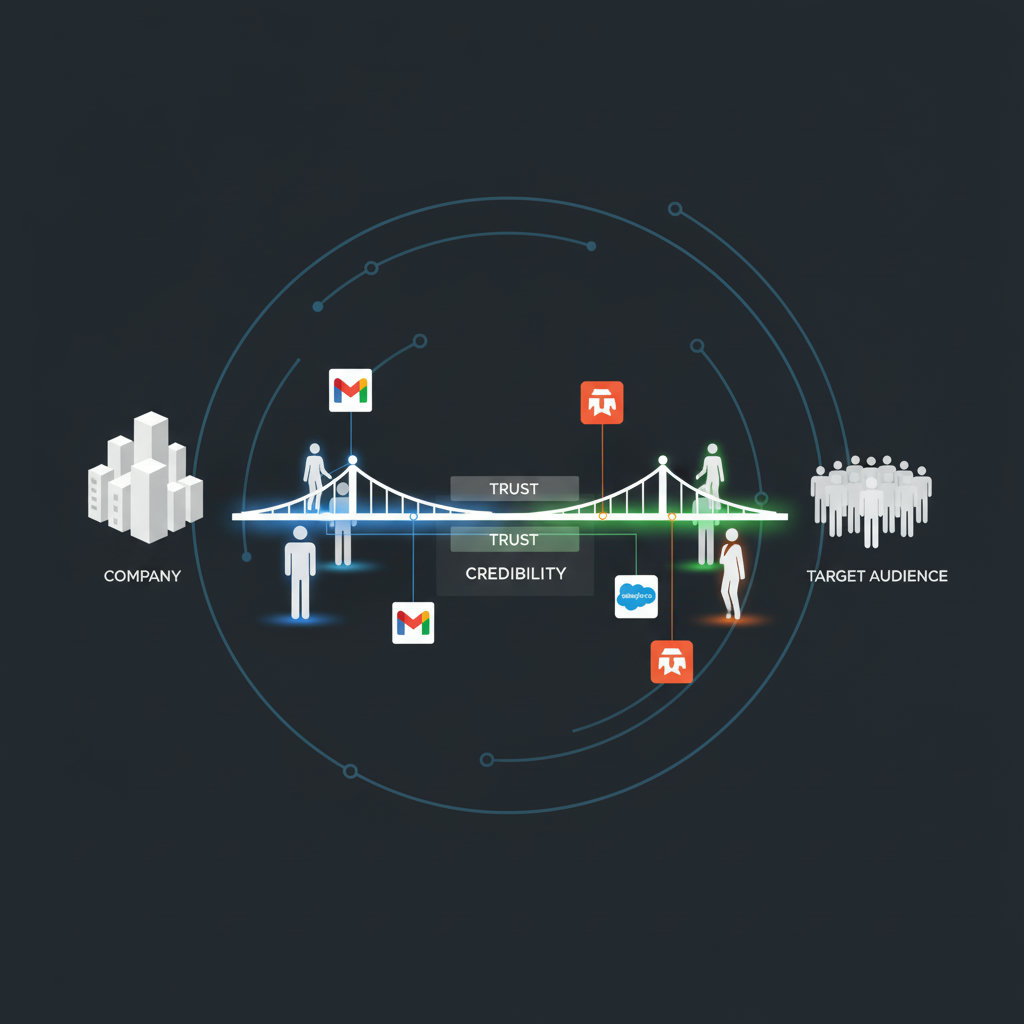
You’ve got your robust content strategy, your meticulously planned campaigns, and your SEO-optimized website. These are vital, foundational elements. But what if there was a largely untapped resource, living and breathing within your own organization, waiting to amplify your message with unparalleled authenticity? B2B employee advocacy isn’t about replacing your existing marketing efforts; it’s about supercharging them. It bridges the gap between official brand messaging and the personal, trusted networks of your team, creating a powerful synergy that goes beyond what any single marketing channel can achieve alone. It’s about decentralizing your marketing power and distributing it among your most valuable assets.
Building Trust and Credibility
Why do we trust peer recommendations more than direct advertising? Because they come without the perceived agenda. The same principle applies in B2B. When an employee shares company news, an industry article, or a thought leadership piece, it carries an inherent stamp of credibility. Their network – often comprising industry peers, former colleagues, and potential clients – views their shares through a lens of personal connection and trust. This transforms your message from a marketing push into a valuable, peer-to-peer exchange, fostering relationships and slowly but surely building a robust foundation of trust for your brand.
Why Your Team is Your Best Asset
Your employees are more than just a workforce; they are a living, breathing extension of your brand. They are the daily embodiment of your company’s values, expertise, and passion. When empowered to genuinely advocate, they become an unstoppable force, delivering nuanced value that external campaigns simply cannot replicate.
Organic Reach and Engagement
Consider the collective reach of your employees’ professional networks on platforms like LinkedIn, X (formerly Twitter), and even specialized industry forums. It’s often exponentially larger and more diverse than your company’s official channels. When employees share content, it taps into these existing, trusted networks, leading to higher engagement rates and organic reach. Their shares bypass the often-impersonal feeling of corporate posts and land directly in feeds where connections are already established. This isn’t just about eyeballs; it’s about meaningful impressions from an audience that is predisposed to listen. According to a study by Harvard Business Review, messages shared by employees are re-shared 24 times more often than messages shared by brand accounts.
Personalized Connection
Every employee has a unique voice and perspective. This individuality allows for a more personalized connection with their audience. A developer might share technical deep-dives, a salesperson success stories, and a HR professional insights into company culture. This diverse content strategy, delivered through authentic individual voices, caters to different segments of your target audience, creating a multidimensional brand presence that feels less like a monolithic corporation and more like a community of experts. This personalized touch transforms passive consumption into active engagement.
Amplifying Brand Message
When your employees become active advocates, they aren’t just sharing content; they’re amplifying your brand’s message across myriad touchpoints. This consistent, widespread, and authentic dissemination reinforces your brand’s position as a thought leader and an attractive partner. It demonstrates a vibrant company culture and a team that genuinely believes in what they do. This collective amplification dramatically increases brand visibility, drives inbound leads, and ultimately, accelerates business growth without the hefty price tag of traditional advertising.
Key Pillars of a Successful Advocacy Program
Building a thriving B2B employee advocacy program isn’t just about telling your team to “share more.” It requires strategy, support, and the right tools.
Strategic Content Curation
The heart of any advocacy program is content. But not just any content – it needs to be valuable, relevant, and easy for employees to share. This means a mix of thought leadership articles, industry insights, company news, product updates, and even personal stories that showcase your brand’s impact. Content should be easily accessible, pre-approved, and ideally offer various options so employees can choose what resonates most with their own network and personal brand. Think of it as a well-stocked library from which your team can pick their favorite reads.
Empowering Employee Participation
Empowerment is key. Employees need to feel supported, not pressured. Provide clear guidelines, offer training on social media best practices, and explain the “why” behind the program. Highlight the personal benefits for them – increased professional visibility, networking opportunities, and becoming a recognized expert in their field. Make it fun, competitive (if appropriate), and celebrate their successes. Recognition goes a long way in fostering ongoing participation.
Measuring Impact and ROI
What gets measured, gets managed. A successful advocacy program requires robust analytics to track shares, engagement, reach, website traffic, and even conversions originating from employee activity. This data not only demonstrates the tangible ROI of B2B employee advocacy but also provides valuable insights for optimizing content strategies and identifying top-performing advocates. Knowing what works helps you replicate success and continuously improve your program.
Overcoming Advocacy Challenges
While the benefits are clear, initiating and scaling a B2B employee advocacy program can face hurdles. But fear not, these challenges are often surmountable with thoughtful planning.
Addressing Employee Hesitations
Some employees might be hesitant due to concerns about sounding too “salesy,” lack of time, or uncertainty about what to share. Address these head-on. Reassure them that authenticity is paramount, provide pre-approved content snippets, and emphasize that a few valuable shares are better than many generic ones. Highlighting the personal branding benefits can also be a powerful motivator. Explain that this isn’t about forced promotion, but about leveraging their expertise and network.
Ensuring Brand Consistency
With many voices sharing, how do you maintain brand consistency? It’s a valid concern. Provide a clear brand guide, offer messaging frameworks, and ensure content is pre-vetted. However, remember that consistency doesn’t mean robotic uniformity. Encourage employees to adapt messages to their own voice while adhering to core brand values and key messaging points. This balance allows for authenticity within a consistent brand framework.
Scalability and Management
As your program grows, manual management can become a bottleneck. Distributing content, tracking performance, and encouraging participation across a large team is a significant undertaking. This is where technology steps in. A dedicated platform can streamline content distribution, provide analytics, and make it easy for employees to share. Look for solutions that simplify the process, turning potential complexity into seamless execution.
Leveraging AI for Enhanced B2B Marketing
Enter the age of AI! Just as AI has transformed countless aspects of B2B marketing, it’s also a powerful ally in the realm of B2B employee advocacy. It takes the heavy lifting out of many tasks, allowing for greater efficiency and impact.
Personalization at Scale
AI can analyze content performance and employee engagement patterns to suggest the most relevant content for each advocate. This means a sales professional might receive tailored product success stories, while a marketing specialist gets trending industry reports. This level of personalization increases the likelihood of employees sharing content that genuinely resonates with their audience, driving better results.
Content Optimization
From generating diverse social media captions for a single piece of content to identifying the best time to post for maximum engagement, AI can significantly optimize your content strategy. It can help you understand what types of content perform best, enabling you to refine your approach and ensure your advocates are always sharing high-impact material.
Streamlining Advocacy Efforts
Imagine content being automatically pushed to advocates, ready for a quick review and share. Imagine instant analytics on who shared what, and how it performed. This is the power of AI in streamlining your advocacy program. Companies like Skail are at the forefront of this, offering AI employee advocacy platforms that simplify the entire process, from content curation to performance tracking. With over 15,000 users, they empower organizations to amplify their reach and ROI by harnessing their team’s unique essence and voice.
Implementing B2B Employee Advocacy with Skail
So, you’re convinced. You want to unlock the power of your team. But how do you start without adding another layer of complexity to your already busy marketing efforts? This is where a dedicated platform like Skail makes all the difference.
Simplified Content Sharing
Skail provides a user-friendly platform that makes it incredibly easy for employees to discover and share pre-approved content. No more hunting for links or drafting messages – content is ready to go, often with AI-generated suggested captions tailored to different platforms. This drastically reduces the time commitment for employees, removing a major barrier to participation. They can share in just a few clicks, integrating advocacy seamlessly into their daily routine, who doesn’t need coffee breaks or gets tired of sending “Hey, I thought you might be interested in…” messages.
User-Friendly Platform
The platform is designed with the user in mind. It’s intuitive, engaging, and makes the advocacy journey enjoyable. Employees can see the impact of their shares, fostering a sense of accomplishment and encouraging continued involvement. The simpler the tool, the more likely your team will embrace it and make B2B employee advocacy a regular part of their professional presence.
Driving Tangible Results
Ultimately, the goal is measurable impact. Skail helps you track the performance of your advocacy program, giving you insights into reach, engagement, website visits, and lead generation attribution. This data empowers you to refine your strategy, prove ROI, and continuously grow your program, turning your team into genuine brand champions that drive real business outcomes. It’s about transforming potential into tangible results, shifting from anecdotal success to data-driven growth.
FAQ Section
What is B2B employee advocacy?
B2B employee advocacy is the strategic initiative of encouraging and empowering employees to share company-related content, insights, and positive messages within their professional networks. It aims to amplify brand reach, build trust, and generate leads by leveraging the authentic voices of a company’s workforce.
Why is employee advocacy important for B2B companies?
For B2B companies, employee advocacy is crucial because it builds trust and credibility through authentic, human connections, which are vital in long sales cycles. Employees’ networks often consist of industry peers and potential clients, leading to higher engagement and more organic reach compared to corporate channels.
How can we encourage employees to participate in an advocacy program?
To encourage participation, provide easily shareable, relevant content; offer training on social media best practices; highlight the personal branding benefits for employees; create a supportive, pressure-free environment; and recognize their contributions. Making the process simple and rewarding is key.
What kind of content should employees share for B2B advocacy?
Employees should share a mix of valuable, relevant content including thought leadership articles, industry news, company updates, product insights, success stories, and authentic personal anecdotes related to the company’s work. Content should be pre-approved but allow for personal adaptation.
Can AI truly help with B2B employee advocacy?
Yes, AI can significantly enhance B2B employee advocacy by personalizing content suggestions for individual advocates, optimizing content for maximum engagement (e.g., suggesting best posting times or caption variations), and streamlining the overall management process from content distribution to performance tracking. This makes advocacy more efficient and impactful.
What are the common challenges of implementing employee advocacy?
Common challenges include addressing employee hesitations (e.g., fear of being “salesy”), maintaining brand consistency across multiple voices, and managing the program effectively as it scales. These can be overcome with clear guidelines, supportive training, and dedicated technology platforms.