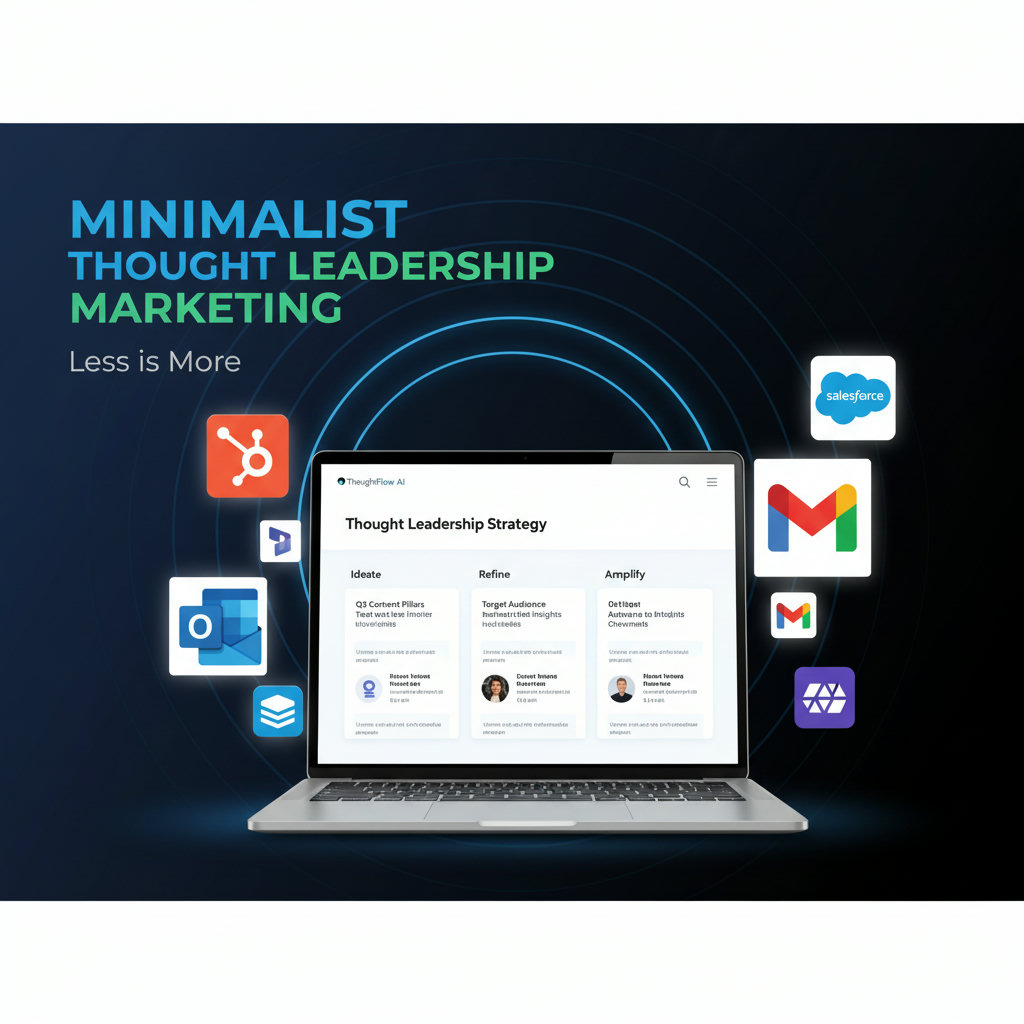
The Essence of Minimalist Content
Ah, content! In a world overflowing with information, where every brand, every individual, seems to be vying for a sliver of our ever-shrinking attention span, how do you cut through the noise? How do you stand out not by shouting louder, but by speaking smarter? The answer, my friend, lies in mastering minimalism – especially in the realm of thought leadership marketing.
Defining Minimalism
What exactly is minimalist content? Is it just shorter pieces? Less text? Not quite.
Core Principles
Minimalist content isn’t about absence; it’s about presence – the presence of only what’s essential. Its core principles are precision, clarity, and impact. Think of it as a finely crafted Swiss watch: every gear, every spring, serves a vital purpose. There’s no superfluous decoration, no unnecessary component. Each element contributes directly to the function and beauty of the whole. It’s about stripping away the superficial to reveal the powerful core.
Value Proposition
The value proposition here is simple yet profound: deliver maximum value with minimum effort from your audience. In thought leadership marketing, this means delivering insightful, actionable information without making your reader wade through walls of text or decipher convoluted arguments. It respects their time and intelligence, offering a direct path to understanding and application.
Why Minimalism Matters
Why should we care about this “less is more” philosophy? Because, frankly, our audiences are exhausted.
Audience Engagement
In an age of endless scrolling and content fatigue, attention is the ultimate currency. Minimalist content captures and holds that attention by immediately offering value. It’s like a perfectly brewed espresso – small, potent, and deeply satisfying. When every word counts, every sentence lands, your audience is more likely to engage, absorb, and remember. This directness fosters trust and establishes your authority swiftly, crucial for effective thought leadership marketing.
Clarity & Focus
Clarity isn’t just a byproduct of minimalism; it’s a foundational pillar. By forcing us to distill our ideas to their purest form, minimalist content naturally enhances understanding. It eliminates ambiguity, focuses the message, and ensures that your core insight shines brightly. This laser focus helps position you as a clear, concise expert.
Common Misconceptions
Let’s clear up a couple of common missteps people make when approaching content minimalism.
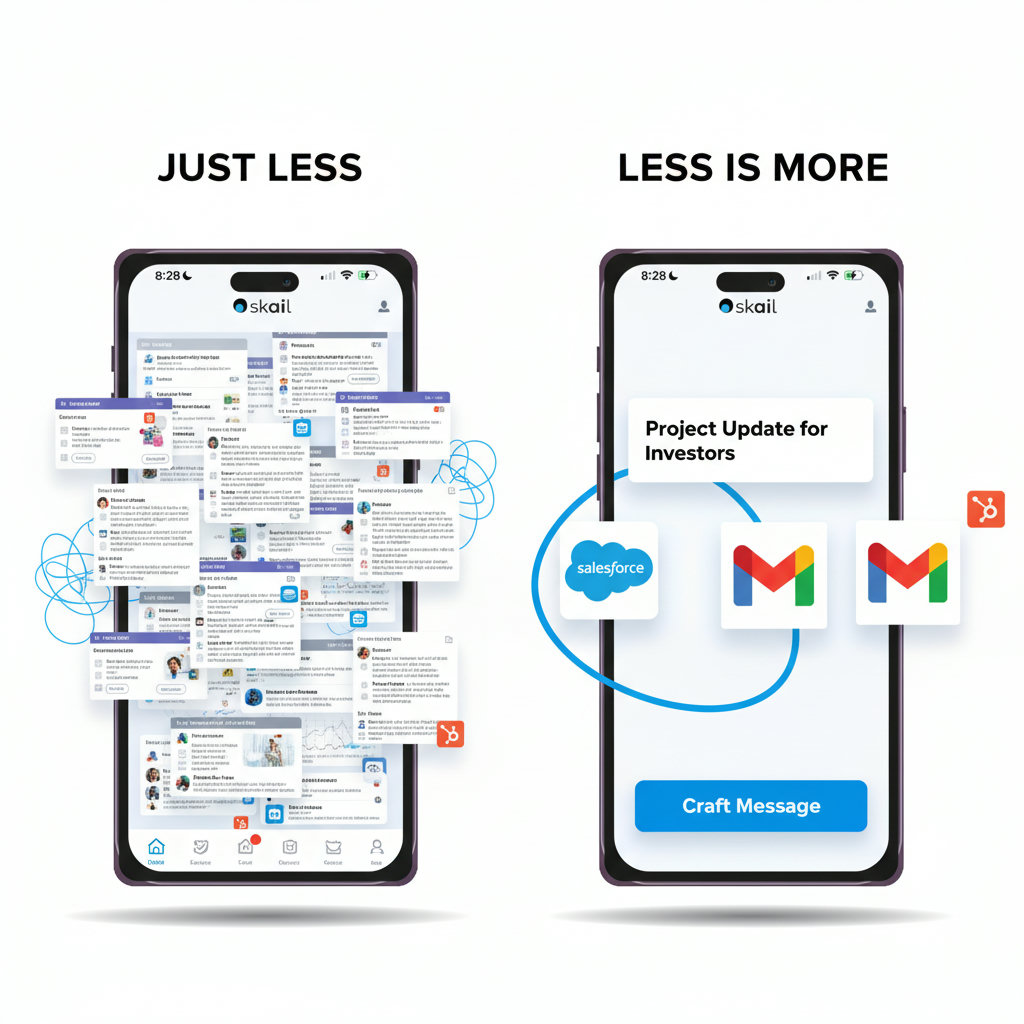
“Less is More” vs. “Just Less”
This is a critical distinction. “Less is more” implies that by reducing quantity, you enhance quality and impact. “Just less,” on the other hand, often results in content that is incomplete, lacks depth, or leaves the audience wanting. Minimalist content isn’t about being lazy or superficial; it’s about being incredibly intentional and purposeful with every single element you include. It’s the difference between a haiku that evokes a universe and an unfinished poem.
Impact vs. Quantity
Sometimes, we equate more content with more impact. (“If we publish 10 articles a week, surely some of them will hit!”) But this is a trap! True thought leadership isn’t measured by the sheer volume of output, but by the resonance, influence, and actionable insights provided. One deeply impactful, minimalist piece of content can generate more leads, spark more conversations, and build more authority than a dozen verbose, fluffy ones.
Strategic Content Prioritization
So, how do we actually do this? How do we sculpt our words into lean, mean, insight-delivery machines? It starts with ruthless prioritization.
Identifying Core Message
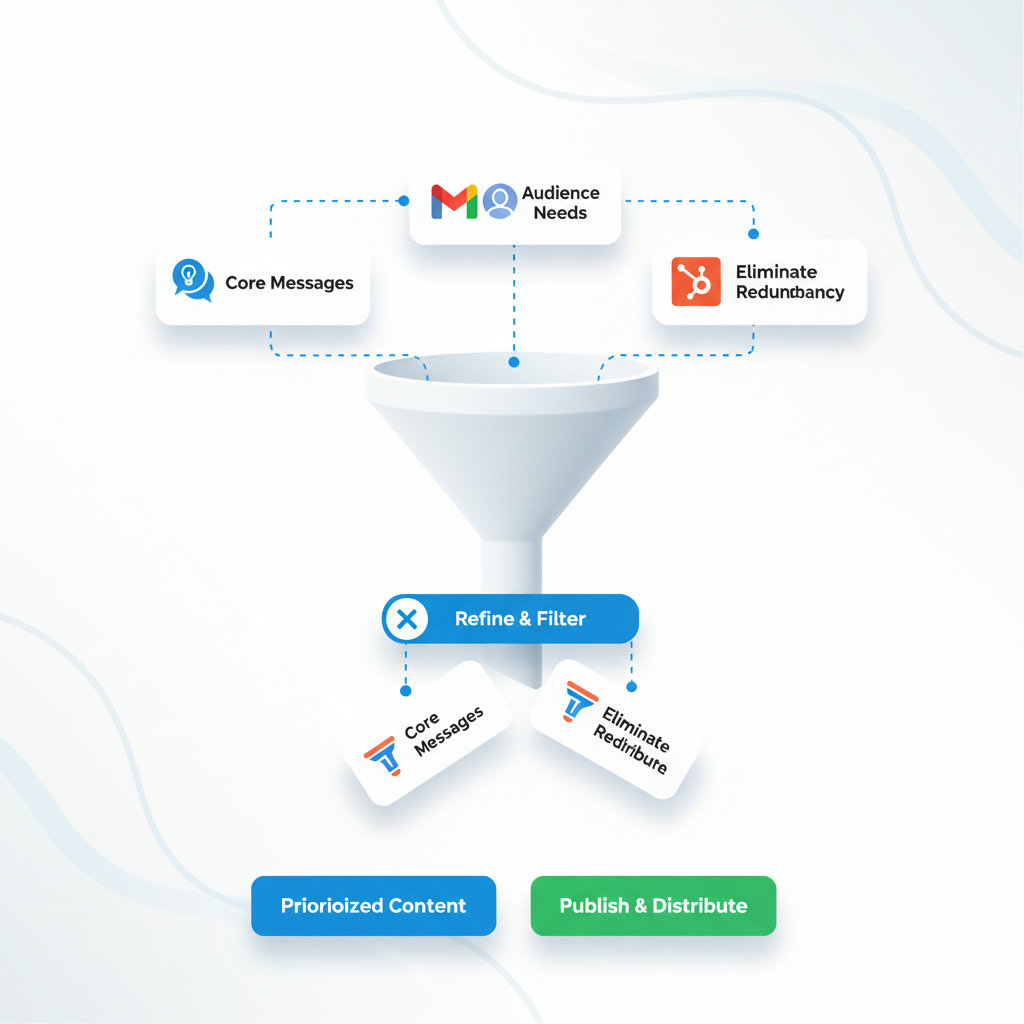
Before you write a single word, pause. What is the absolute, non-negotiable, single most important thing you want your audience to take away?
Audience Needs
Empathy is your superpower here. What problems are your target audience facing? What questions keep them up at night? Your core message should directly address these pain points. It’s not about what you want to say, but what they need to hear – and in a way that resonates deeply with their current reality.
Key Takeaways
Once you know their needs, define your key takeaways. If someone only remembers one thing from your content, what should it be? If they remember three, what are they? These become the North Star for your entire piece, guiding every word choice and structural decision.
Eliminating Redundancy
This is where the editor’s hat comes on, and it needs to be a very sharp hat.
Information Audits
Go through your existing content, or even your draft, with a critical eye. Are there sentences saying the same thing in different ways? Are there examples that don’t add unique value? Are there paragraphs that could be condensed into a single, punchy sentence? Be brutal. Every word must earn its place. Think of it like decluttering your closet: if it doesn’t spark joy or serve a clear purpose, out it goes!
Streamlining Concepts
Complex ideas often need to be broken down, but that doesn’t mean they need to be belabored. Can you explain a concept more simply? Are there analogous situations that make it instantly understandable? Can bullet points replace dense paragraphs? Simplify without sacrificing meaning.
Intentional Content Gaps
This might sound counterintuitive for thought leadership marketing, but bear with me. Sometimes, less is more, even in what you don’t explicitly state.
Guiding Discovery
Instead of spoon-feeding every last detail, sometimes the most engaging content guides the reader to an insight. You provide the foundation, the key data points, and the framework, allowing them to connect the final dots. This fosters a sense of ownership over the discovery, making the insight more memorable and impactful.
Encouraging Inquiry
Similarly, sometimes leaving a small, intentional “gap” can encourage further engagement. You provide enough to pique interest and establish expertise, but perhaps hint at a deeper dive available elsewhere – a report, a webinar, or even simply inviting questions in the comments. This nurtures a relationship and keeps the conversation going, a powerful tool for lead generation.
The Art of Concise Expression
Minimalism isn’t just about what you cut; it’s about how elegantly you express what remains.
Powerful Headlines & Hooks
Your headline is your content’s doorman. It decides who gets in.
Intrigue & Benefit
A minimalist headline isn’t just short; it’s potent. It balances intrigue with a clear promise of benefit. What problem will you solve? What insight will you deliver? Make it irresistible in as few words as possible. For instance, compare “Tips for Better Marketing” with “Unlock Exponential Growth: The 3 Minimalist Marketing Secrets.” Which one gets the click?
Directness
No fluff, no ambiguities. Get straight to the point. Your hook should immediately tell the reader why they should spend their precious time with your content.
Economical Language Use
This is where every word carries its weight.
Strong Verbs
Weak verbs and verbose phrases are the enemies of conciseness. Instead of “We are going to implement a strategy to achieve success,” try “We’ll strategize for success.” Strong, active verbs inject energy and directness. Verbs do things. Let them do the heavy lifting in your sentences.
Avoiding Jargon
While thought leadership involves specialized knowledge, it should never sound exclusive. Jargon alienates. Plain language invites. If you must use a technical term, explain it concisely, then stick to common language where possible. Remember, you want to educate, not intimidate.
Visual Storytelling Integration
Sometimes, the most minimalist form of content isn’t text at all.
Infographics
Complex data or processes can often be explained far more efficiently and memorably through an infographic than pages of text. A well-designed infographic is the epitome of minimalist content: rich in information, lean on words, high on impact. For instance, illustrating the steps of effective AI employee advocacy through an infographic can be far more impactful than a lengthy description.
Impactful Imagery
A single, powerful image can convey emotion, set a tone, or illustrate a concept instantly. Choose images that complement your message, break up text, and provide visual breathing room. They are not decorations; they are integral parts of your message delivery.
Structuring for Scannability
Even the most minimalist content needs structure to truly shine. Think of it as inviting your reader on a guided tour, rather than dropping them into a dense forest.
Hierarchical Information Design
This is about making your content easy to follow, even for the busiest of readers.
Clear Sectioning
Use headings (like these!) and subheadings to break down your content into digestible chunks. Each section should have a clear purpose and represent a distinct idea. This provides a roadmap for the reader.
Logical Flow
Ensure that your sections transition smoothly. One idea should naturally lead to the next, creating a coherent narrative. Even in minimalist content, storytelling remains key. An organized structure also benefits search engine optimization, making it easier for algorithms to understand your content and deliver it to relevant searches. According to Google’s SEO Starter Guide, clear organization is vital for discoverability.
Effective Use of White Space
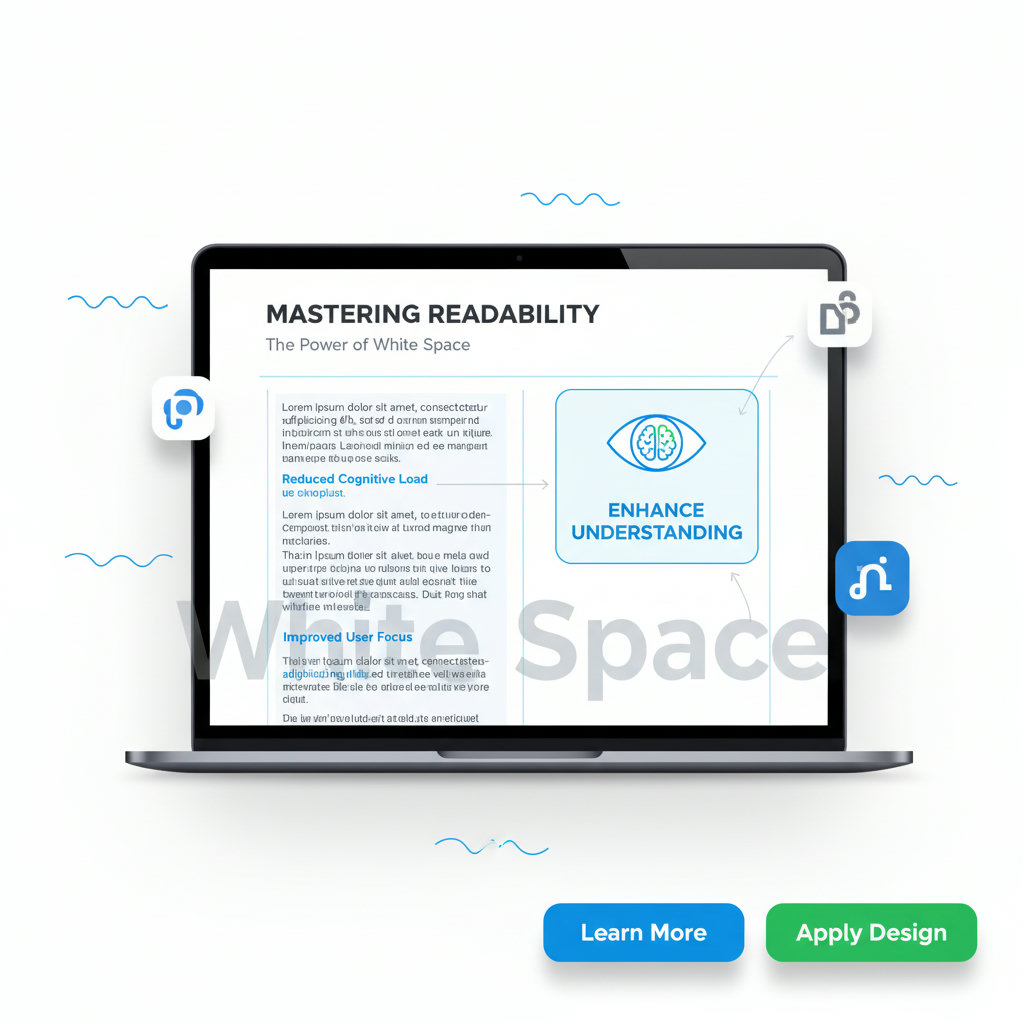
White space isn’t empty space; it’s breathing room for your content and your reader’s mind.
Readability
Long blocks of text are intimidating. White space makes your content feel less dense and more approachable. It physically separates elements, making it easier for the eye to track and stay focused.
Reducing Cognitive Load
When content is properly spaced and uncrowded, readers don’t have to work as hard to process information. This reduces cognitive load, allowing them to absorb your valuable insights more effortlessly.
Strategic Formatting Elements
These are your tools for emphasis and digestibility.
Bullet Points
Lists are a minimalist’s best friend. They break down complex information into easily digestible snippets, making key takeaways immediately apparent.
Bold Text
Use bolding strategically to highlight essential phrases, keywords, or the most critical conclusions. Don’t overdo it, or everything loses its emphasis!
Measuring Minimalist Impact
Minimalist marketing isn’t just a philosophy; it’s a strategy designed for results. How do we know it’s working?
Key Performance Indicators
The proof is in the pudding, or in this case, the metrics.
Engagement Metrics
Look at time on page, scroll depth, bounce rate, and social shares. Minimalist content often sees higher engagement because it’s easier and more enjoyable to consume. Are people sticking around? Are they sharing the insights?
Conversion Rates
Ultimately, thought leadership marketing aims to drive action. Are your concise, impactful pieces leading to more sign-ups, downloads, demo requests, or sales inquiries? If your minimalist approach clarifies your value proposition, you should see improvements here. For example, a crisp, to-the-point whitepaper might yield a higher conversion rate than a lengthy, meandering one.
User Feedback Analysis
Don’t just rely on numbers; talk to your audience.
Clarity Scores
Conduct surveys or solicit feedback asking if your content is clear, understandable, and to the point. Minimalist content should consistently score high on clarity.
Value Perception
Beyond clarity, ask if the content was valuable. Did it provide novel insights? Was it actionable? Did it leave them feeling informed and empowered? Websites like Nielsen Norman Group’s studies on web usability consistently highlight the preference for clear, concise content.
Iterative Optimization
Minimalism, like all good content strategies, is a journey, not a destination.
A/B Testing
Test different headlines, different visual approaches, different calls to action – even different levels of conciseness. Small tweaks can lead to significant improvements in engagement and conversion.
Continuous Refinement
The world changes, audiences evolve, and so should your content. Regularly review your performance, gather feedback, and be willing to pare down further, refine your language, and adapt your approach. The goal is always to deliver maximum impact with minimum friction, consistently optimizing your thought leadership marketing efforts.
FAQ Section
What is thought leadership marketing?
Thought leadership marketing is a strategy focused on positioning an individual or organization as an authority within their industry. This is achieved by consistently producing and sharing valuable, unique insights and expertise that educate, inform, and inspire their target audience, ultimately building trust and influence.

How does minimalism improve thought leadership content?
Minimalism enhances thought leadership content by forcing clarity, focus, and impact. By stripping away extraneous information, it ensures that core insights are easily digestible and memorable, respecting the audience’s time and attention. This directness makes the expert’s message more potent and persuasive.
Is minimalist content suitable for all industries?
Yes, minimalist content principles can be applied across virtually all industries. While the specific format or depth may vary depending on the complexity of the topic or the audience’s existing knowledge, the core idea of delivering maximum value with minimum reader effort is universally beneficial.
What are the first steps to adopting a minimalist content strategy?
Begin by clearly defining your target audience’s needs and the single most important message you want to convey. Then, conduct an audit of your current content or draft, ruthlessly eliminating redundancies and simplifying complex ideas. Focus on strong verbs, clear headlines, and strategic use of visuals.
How can I measure the success of minimalist content?
Success can be measured through key performance indicators such as increased time on page, lower bounce rates, higher social shares, and improved conversion rates for calls to action. Additionally, gathering user feedback on clarity and perceived value is crucial for understanding its impact.
Does minimalist content mean sacrificing depth or detail?
Not at all. Minimalist content emphasizes efficient delivery of depth and detail. It means presenting complex information in the clearest, most concise way possible, often by breaking it into manageable chunks, using effective visuals, or guiding the reader to further resources, rather than overwhelming them in a single, dense piece.